Modern Crewneck Sweater Crochet Pattern for Beginners
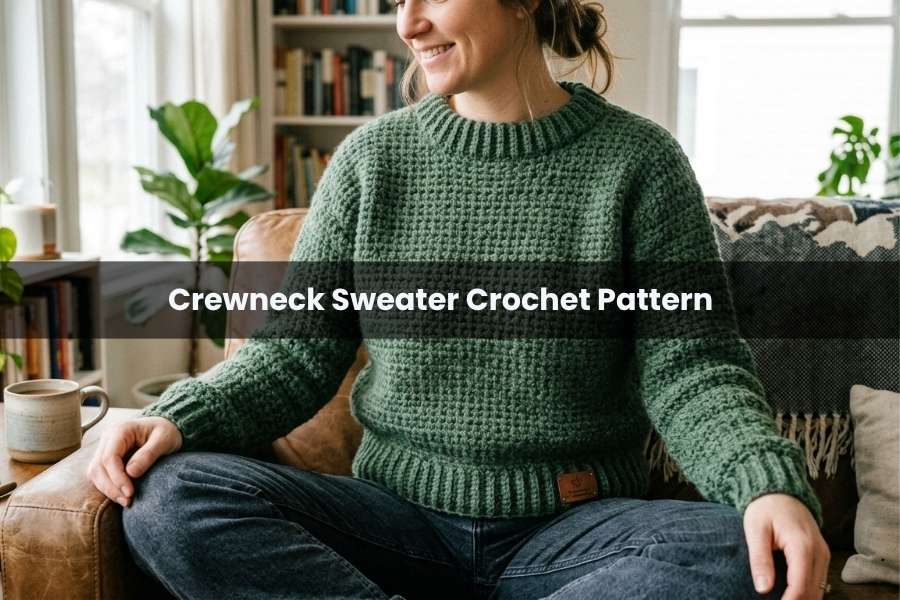
Crocheting your first garment is a major milestone. This modern crewneck sweater design focuses on clean lines and a relaxed fit, making it a versatile staple for any wardrobe. Using basic stitches and simple construction, this project is specifically tailored for beginners looking to create a professional-quality piece without complex shaping.
Essential Materials and Tools
To get started, you will need a few basic supplies. While specific yarn weights can vary based on your desired drape, a medium-weight (level 4) acrylic or wool blend is often recommended for beginners due to its ease of use. You will also need:
- A crochet hook (size recommended by your yarn label).
- A yarn needle for weaving in ends.
- Measuring tape to ensure the correct fit.
- Stitch markers to keep track of your rows.
Basic Construction Overview
Most modern crewneck sweaters are built using a “panel” method. This involves creating a front panel, a back panel, and two sleeve sections. These pieces are worked flat and then seamed together. This approach is much easier for beginners to manage than working in the round, as it allows you to visualize the garment’s dimensions more clearly as you progress.
Sizing and Fit
Before starting, it is crucial to take your measurements. Measure the widest part of your bust and the length from your shoulder to your desired hemline. To achieve a “modern” fit, many patterns include “positive ease,” meaning the sweater is slightly larger than your actual body measurements for a cozy, oversized look.
Understanding the Stitches
The beauty of a minimalist crewneck lies in simple stitch patterns. Most modern designs utilize the Single Crochet (sc) or Double Crochet (dc) for the main body. The classic ribbed texture found on the neck, cuffs, and hem is usually achieved by working in the back loops only (BLO) of your stitches, creating a stretchy, knit-like appearance.
Mastering Your Tension
Consistency is key when making a garment. If your stitches are too tight, the sweater will be stiff; if they are too loose, it may lose its shape. It is highly recommended to crochet a small “gauge swatch” before beginning the full project to ensure your stitch size matches the intended dimensions.
Finishing and Care
Once all panels are crocheted, they are joined using a mattress stitch or a slip stitch seam. After assembly, it is best to hand wash your sweater and lay it flat to dry. This prevents the fibers from stretching or piling, ensuring your handmade piece lasts for many seasons.
Choosing the Right Fiber for Drape
The “hang” of your sweater depends entirely on your yarn choice. Cotton provides a heavier, structured feel, while alpaca or mohair blends offer a soft, fuzzy halo. For a modern look that isn’t too bulky, look for yarns with a slight sheen or a multi-tonal twist.
The Importance of Blocking
Blocking is the “secret sauce” of crochet. By pinning your finished panels to a foam board and lightly steaming them, you can even out wonky edges and ensure every piece is the exact measurement required before seaming. It transforms a handmade item into a polished garment.
Selecting a Color Palette
Modern aesthetics often lean toward neutrals like cream, charcoal, or forest green. However, “color-blocking”—using one color for the body and another for the sleeves—is an easy way to add a contemporary twist to a simple pattern without needing advanced technical skills.
Video Guide
The below video contains all the steps you need: